
Pay-as-you-throw and container access control: the complete guide for local authorities
Waste management is a strategic issue for local authorities. Rising costs, regulatory requirements and environmental targets are pushing traditional models to their limits. Pay-as-you-throw (incentive-based waste charging) has become an effective way to reduce waste and improve sorting. But its success depends on one key element: access control on containers and drop-off banks. This guide explains how these technologies help optimise waste management and secure installations.
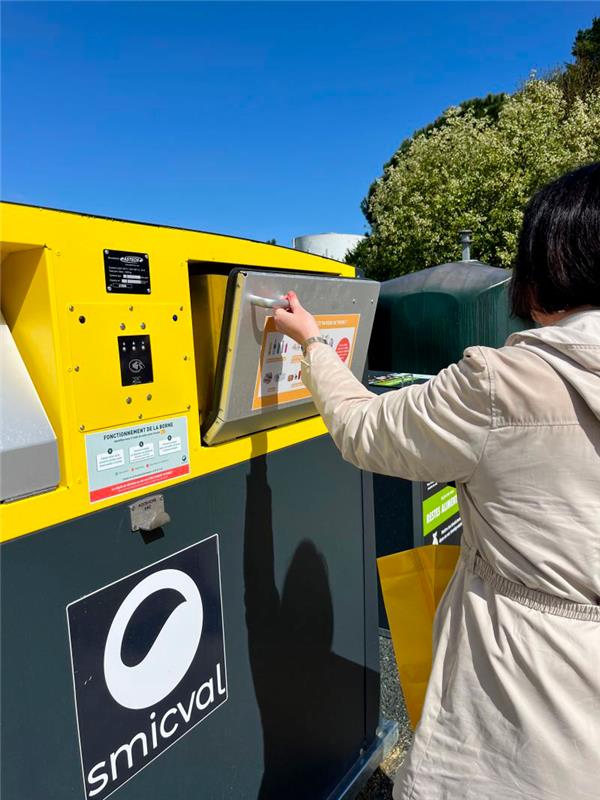
What is pay-as-you-throw?
Pay-as-you-throw means charging residents according to the amount of waste they produce. In France, the ADEME supports authorities that adopt it.
Goals of pay-as-you-throw
- reduce residual waste;
- improve selective sorting;
- make residents accountable;
- keep costs under control.
Why use drop-off banks?
Drop-off banks (bring banks) pool collection points and make collection rounds more efficient.
- lower collection costs;
- better use of public space;
- better sorting.
The limits of open-access containers
Without access control, authorities face several problems:
- illegal dumping: waste is left outside the containers;
- poor sorting quality: without user follow-up, sorting performance drops;
- unauthorised use: containers are used by people from outside the area.
Why access control is essential for pay-as-you-throw
Access control secures installations and identifies users.
User identification
- RFID badge;
- QR code;
- mobile app.
Tracking each deposit
Every opening of a container is recorded, which allows:
- accurate billing;
- more transparency;
- analysis of how containers are used.
How a connected container works
Secure opening
Access by badge, QR code or mobile app.
Data transmission
Data is sent to a monitoring platform.
Analysis and management
Authorities can track usage, optimise collection rounds and adjust charges.
How to choose a container access control solution
Compatibility
The solution must fit existing containers. Redin is compatible with all container brands on the market and fits existing containers and bin shelters.
Identification technologies
Every opening is recorded and sent to the Syren platform, which feeds billing software (Tradim, Styx, ATPMG, Gesbac). A Redin reader handles lists of up to 100,000 badges and stores 10,000 transactions if the network is down.
| Access method | How it works | Advantages | Points to watch |
|---|---|---|---|
| Personal RFID badge | The user holds their badge (13.56 MHz: Mifare, Desfire, I-Code SLI) to the container reader | Simple, rugged, no phone needed | Badges must be distributed and replaced |
| QR code | The user shows a QR code to the reader | No badge to distribute, handy for occasional access | The user must have their QR code with them |
| Ecopass mobile app | The user opens the container with their Ecopass account, activated immediately | Ideal for new residents and temporary users | Requires a smartphone |
Monitoring
The platform must offer real-time tracking, data analysis and integration with business software.
Pay-as-you-throw and access control: the BH Environnement solution
Dedicated solutions exist for these needs. At BH Environnement, it is Redin, container access control, supervised with the Syren platform.
- user identification;
- recording of every opening;
- central monitoring;
- compatibility with existing containers.
In a rural French community of municipalities with fewer than 20,000 inhabitants, 141 access-controlled household waste containers made pay-as-you-throw possible: residual household waste fell by 61%, more than twice the 30% target, and 70% of households saw their bill go down (case study in French).
FAQ
What is pay-as-you-throw?
A system in which residents pay according to the amount of waste they produce.
Why install access control on a waste container?
To identify users, limit misuse and improve sorting.
How can illegal dumping be reduced?
By combining awareness campaigns with access control technologies.

About the author
CEO of BH Environnement
Jeroen Bos has led BH Environnement since 2025. He joined the BH group in 2018, first in technical support and then in business development, before taking over the Environment business line of BH Technologies in 2021. He supports local authorities with container access control and pay-as-you-throw projects, from scoping to roll-out. Before BH, he founded and ran two companies in the Netherlands and Belgium.
Would you like a free demo?
We will be happy to give you a free demonstration of our solution and discuss your project.