Drop-off points: keeping them clean and efficient with remote monitoring
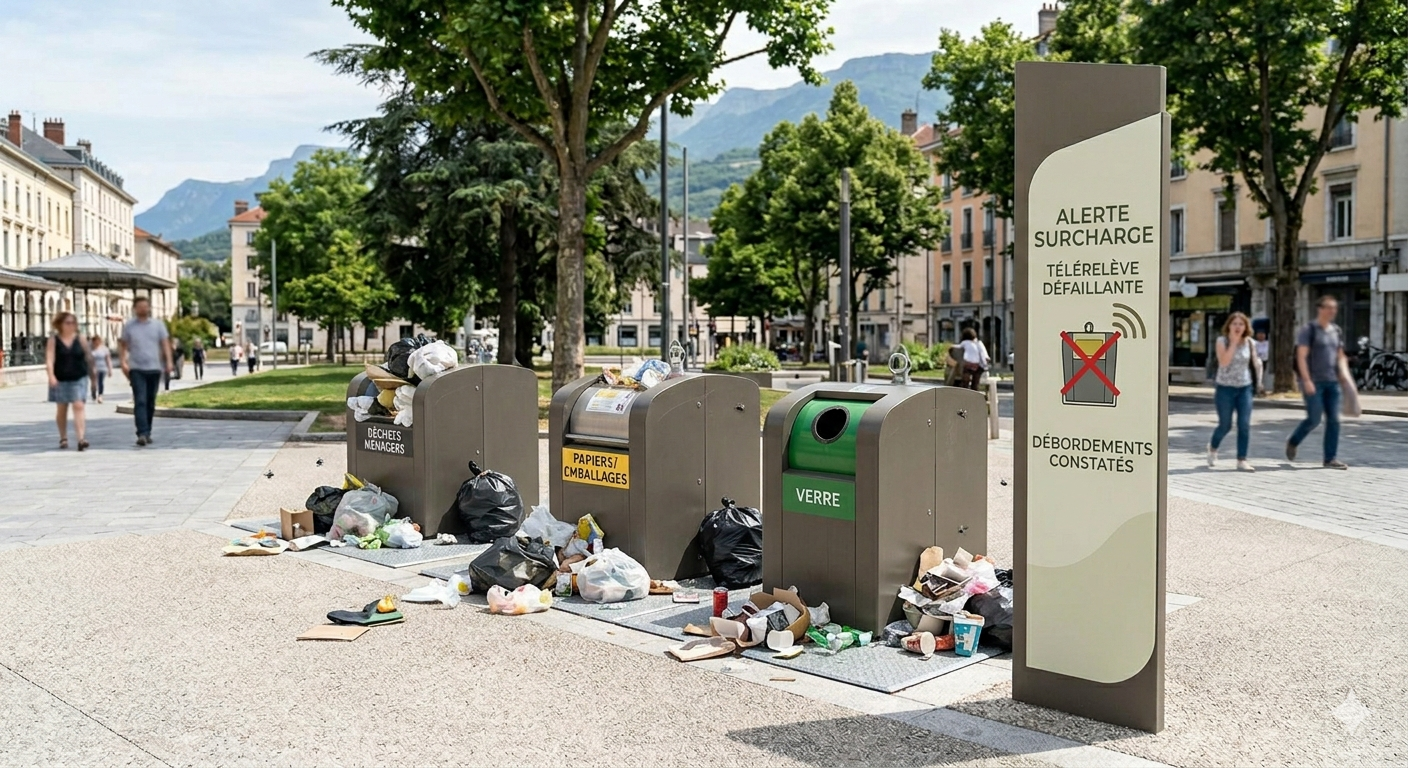
Drop-off points (bring banks) are central to how waste sorting is organised. They structure waste streams, make collection easier and make residents responsible. Yet their efficiency rests on a fragile balance. When a container is full, a resident who cannot drop off their waste often leaves it next to the container. This apparently harmless act triggers a well-known chain reaction: within a few hours, a clean site can turn into an eyesore. Remote fill-level monitoring prevents exactly this tipping point.
What causes overflowing drop-off points?
Overflows do not happen by chance. They usually result from a lack of information.
No real-time visibility
In a conventional organisation, crews follow a fixed schedule. But containers never fill up at a steady pace. Some fill very quickly, especially in dense or commercial areas, while others stay partly empty for days. Without precise visibility, it is impossible to anticipate.
A knock-on effect that is hard to stop
When a first bag is left on the ground, it acts as a signal that the container is full. Other bags quickly follow. This frequently observed phenomenon turns a simple overflow into an illegal dumping site. The longer the intervention is delayed, the worse the situation gets.
The consequences for the local authority
Higher intervention costs
Picking up waste from the ground is a different process from regular collection. It requires dedicated crews, quick interventions and more complex organisation, so it costs significantly more.
A damaged image of the public service
A poorly maintained drop-off point sends a negative message and suggests a lack of follow-up. Residents may lose confidence in the sorting system.
Remote monitoring: preventive management of drop-off points
Remote monitoring changes the logic of intervention, from reactive management to anticipation.
Tracking fill levels continuously
With sensors, each container becomes a source of information. Fill levels are measured regularly and sent automatically, giving crews a clear, up-to-date view of the field.
Triggering collection at the right time
Thresholds can be set to trigger alerts before containers are full. When a container approaches its maximum capacity, a collection is scheduled, and overflows are avoided before they happen.
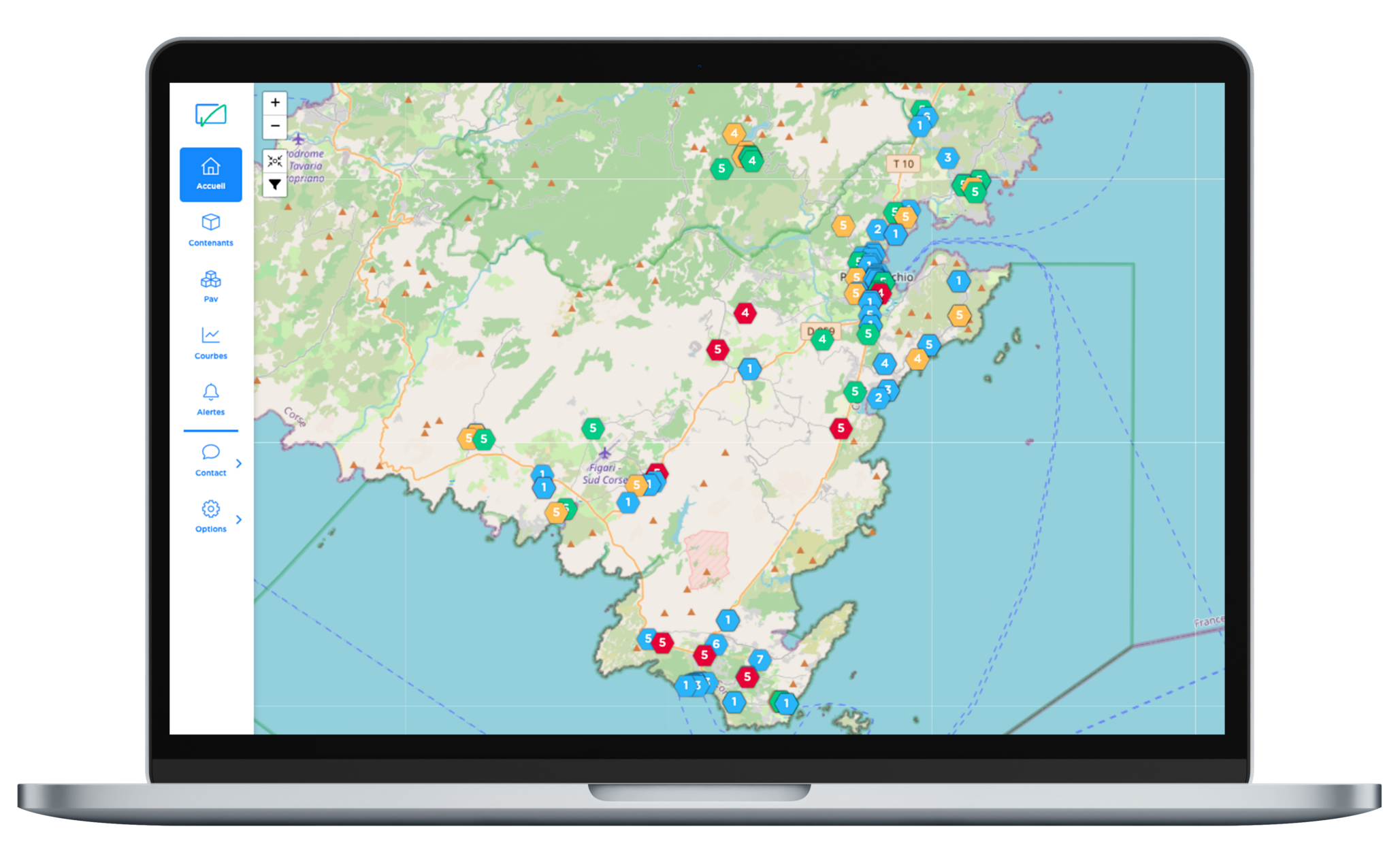
Heywaste Web, BH Environnement’s monitoring platform. The dashboard shows the fill level of every container measured by Heywaste sensors.
More efficient collection rounds
Remote monitoring also makes it possible to optimise waste collection routes.
Prioritising interventions
Crews know exactly which sites need collecting and can deal with critical areas first.
Adjusting collection frequencies
Not all drop-off points are used at the same pace. Data makes it possible to adjust frequencies to actual use, which improves the overall efficiency of the service.
Lasting improvements in urban cleanliness
Visibly less illegal dumping
By avoiding full containers, waste left on the ground drops sharply. Sites stay clean and emergency interventions become rare.
Better resident involvement
When containers are available and clean, residents are more inclined to sort their waste properly. Service quality directly influences behaviour.
FAQ
Can overflows be eliminated completely?
They can be greatly reduced through better anticipation.
Is remote monitoring suitable for all drop-off points?
Yes, including underground containers.
What is the main benefit?
Cleaner sites, lower costs and more satisfied residents, all at the same time.

About the author
Deputy CEO of the BH group, founder of Heyliot
Cyril Pradel founded Heyliot (now BH Environnement) in 2017 and ran it for eight years. He led the design and French manufacturing of the Heywaste fill-level sensors and filed a patent on laser measurement of container fill levels. With more than twenty years in information systems, networks and IoT, he is now Deputy CEO of the BH group (BH Technologies and BH Environnement), in charge of digital transformation and AI.
Would you like a free demo?
We will be happy to give you a free demonstration of our solution and discuss your project.